

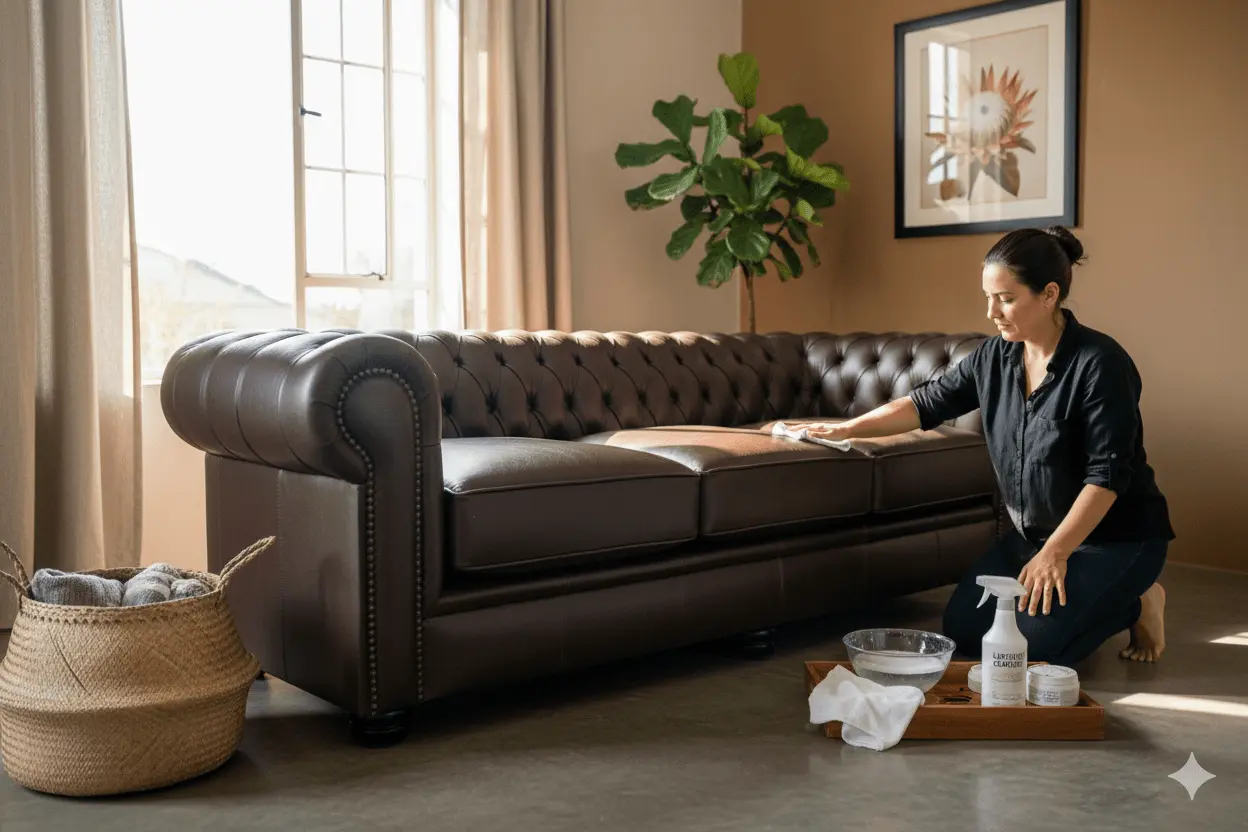
Leather couches are a popular choice in South African homes — and for good reason. They’re durable, timeless, and well suited to our climate. But whether you live in Gauteng, the Western Cape, or KZN, proper leather care is essential to keep your couch looking good for years.
This guide explains how to clean leather couches safely, what to avoid, and how to protect your investment in South African conditions.
Why Leather Couches Need Special Care in South Africa
South Africa’s climate presents a few unique challenges for leather furniture:
Dry air and heat can cause leather to crack if it isn’t conditioned
Dust and grit (especially in inland areas) can wear down the surface
Sun exposure through windows can fade and dry out leather
Load shedding often means fluctuating indoor temperatures and humidity
That’s why cleaning leather correctly — not just wiping it down — is so important.
Step-by-Step: How to Clean a Leather Couch Properly
1. Start by Removing Dust and Debris
Use a soft cloth or vacuum cleaner with a brush attachment to remove dust, crumbs, and pet hair from:
Seat cushions
Creases and seams
Under removable cushions
This step prevents dirt from being rubbed deeper into the leather during cleaning.
2. Use a Mild Cleaning Solution (Never Harsh Chemicals)
For routine cleaning, mix:
Warm water
A small amount of mild soap (such as baby soap or a pH-neutral leather cleaner)
Dampen a soft cloth (do not soak it) and gently wipe the surface.
Avoid:
Household detergents
Vinegar
Alcohol
Ammonia
All-purpose cleaners
These products strip natural oils from leather and cause long-term damage.
3. Treat Spills Immediately
In busy South African households, spills happen — coffee, wine, cooldrink, or food oils.
Blot spills immediately with a dry cloth
Do not rub, as this spreads the stain
For oily stains, allow the leather to absorb naturally before gentle cleaning
If a stain doesn’t lift easily, it’s better to stop than risk damaging the finish.
4. Dry Naturally
After cleaning:
Wipe with a dry cloth
Allow the couch to air-dry naturally
Do not use:
Hairdryers
Heaters
Direct sunlight
Heat dries out leather and leads to cracking — a common issue in SA homes.
Conditioning Leather: The Step Many People Skip
Cleaning alone is not enough. Leather needs to be conditioned to stay supple.
How Often Should You Condition Leather?
Every 3–6 months
More often in dry or sunny environments
Use a quality leather conditioner suitable for genuine leather. Conditioning:
Replaces natural oils
Prevents cracking
Restores softness and colour depth
This step is especially important for genuine leather couches, which age naturally over time.
What Not to Do When Cleaning Leather Couches
Avoid these common mistakes:
❌ Using wet cloths or soaking the leather
❌ Sitting on the couch before it’s fully dry
❌ Using “DIY hacks” found online (vinegar, baking soda, wipes)
❌ Placing leather couches in direct sunlight
These shortcuts often cause irreversible damage.
Tips for Protecting Leather Couches in South African Homes
Position couches away from direct sunlight
Rotate cushions regularly to prevent uneven wear
Keep pets’ claws trimmed
Use throws in high-traffic areas
Maintain indoor humidity where possible
With the right care, a quality leather couch can last 10–20 years.
When to Call a Professional
If your leather couch has:
Deep stains
Cracks or peeling
Severe fading
Sticky or greasy residue
A professional leather cleaning service or furniture specialist is the safest option.
Final Thoughts
Cleaning leather couches doesn’t require expensive products — just the right approach. With regular dusting, gentle cleaning, and proper conditioning, leather furniture is one of the most durable and rewarding investments for South African homes.
If you’ve invested in genuine leather seating, good maintenance protects both its comfort and its value.