
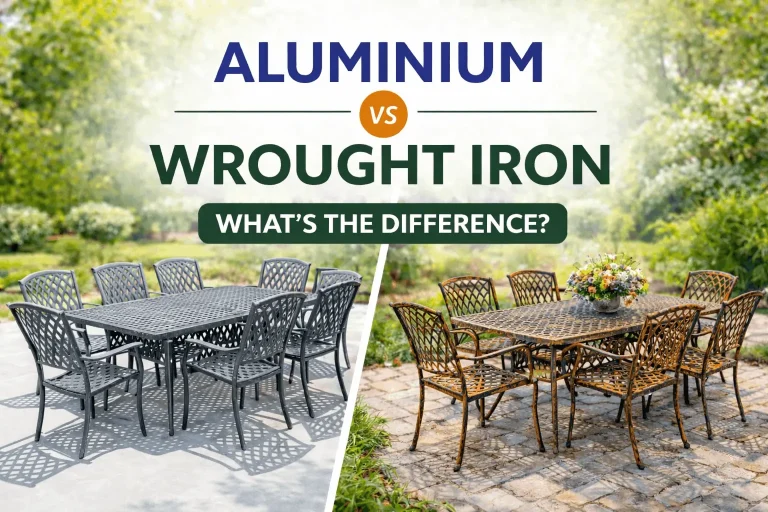
Choosing the right material for outdoor furniture is just as important as choosing the design. Two popular options — aluminium and wrought iron — each offer distinct advantages depending on how and where the furniture will be used.
Understanding the differences between these materials can help you make a more informed decision and ensure your outdoor furniture lasts for years to come.
Understanding Aluminium Outdoor Furniture
Aluminium is widely used in modern outdoor furniture due to its lightweight nature and resistance to the elements. Unlike many metals, aluminium does not rust, making it particularly well suited to outdoor environments.
Many homeowners prefer aluminium because it offers durability without the maintenance demands of heavier metals, as seen across our range of
Key characteristics of aluminium outdoor furniture include:
Lightweight construction, making it easy to move and reposition
Natural resistance to corrosion and moisture
Low maintenance requirements
Clean, contemporary appearance
Because aluminium does not absorb moisture, it performs well in areas exposed to rain, humidity, or temperature fluctuations.
Understanding Wrought Iron Outdoor Furniture
Wrought iron has long been associated with traditional outdoor furniture designs. Its solid construction and decorative detailing give it a classic, timeless look.
Key characteristics of wrought iron outdoor furniture include:
Heavier weight, offering stability in windy conditions
Strong, rigid structure
Traditional and ornate styling
Requires protective coatings to prevent rust
While durable, wrought iron typically needs more ongoing care to maintain its appearance, especially when exposed to moisture.
Aluminium vs Wrought Iron: Key Differences
Weight and Mobility
Aluminium furniture is significantly lighter than wrought iron, making it easier to move, store, or rearrange. Wrought iron’s weight can be beneficial for permanence but less practical for flexible outdoor spaces.
Rust and Corrosion Resistance
Aluminium does not rust, whereas wrought iron can corrode if protective finishes are damaged or wear over time. This makes aluminium a popular choice in climates with higher humidity or rainfall.
Maintenance Requirements
Aluminium furniture generally requires minimal upkeep — occasional cleaning is often sufficient. Wrought iron furniture typically needs periodic maintenance, such as repainting or rust treatment.
Comfort and Temperature
Aluminium tends to remain cooler to the touch than wrought iron, particularly in direct sunlight. Wrought iron can heat up quickly, which may affect comfort during warmer months.
Design and Style
Aluminium furniture often features modern, streamlined designs, while wrought iron is commonly associated with more decorative or traditional styles. The right choice depends largely on personal preference and the surrounding environment.
Which Material Is Better Suited to Outdoor Use?
Both aluminium and wrought iron can be suitable for outdoor furniture, but aluminium is often preferred for:
Low-maintenance outdoor spaces
Areas exposed to frequent rain or moisture
Homes where furniture is moved or reconfigured regularly
Contemporary outdoor settings
Wrought iron may be better suited to:
Permanent outdoor installations
Sheltered patios or covered areas
Traditional or decorative design schemes
Final Thoughts
When choosing outdoor furniture, material selection plays a major role in durability, comfort, and long-term care. Aluminium offers a practical, low-maintenance option that performs well across a wide range of outdoor conditions, while wrought iron provides a heavier, more traditional alternative that may require additional upkeep.
Understanding these differences makes it easier to choose furniture that aligns with both your lifestyle and your outdoor environment.