

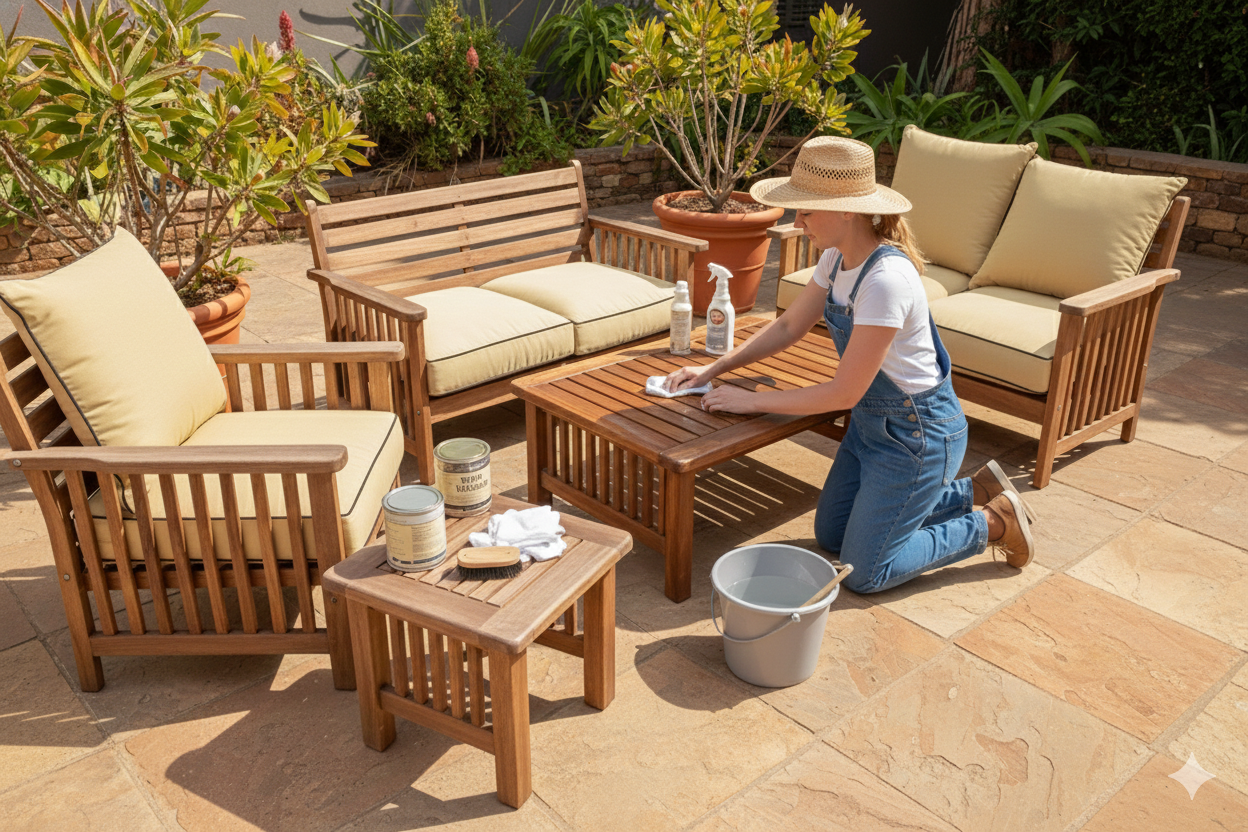
Teak outdoor furniture is a popular choice in South Africa thanks to its natural durability, resistance to the elements, and timeless look. Whether it’s used on a patio, in a garden, or at a coastal home, teak performs exceptionally well — if it’s treated correctly.
This guide explains how to treat teak outdoor furniture, how often to do it, and what works best in South African weather conditions.
Why Teak Needs Treatment in South Africa
Teak contains natural oils that protect it from moisture, insects, and decay. However, South Africa’s climate still takes its toll:
Strong sun and UV exposure can dry out teak
Coastal salt air accelerates weathering
Dry inland conditions can cause surface cracking
Rain and dust dull the wood over time
Without treatment, teak will naturally fade to a silver-grey patina. Some homeowners love this look — others prefer to maintain the original warm, honey-brown colour.
Should You Treat Teak Outdoor Furniture?
The short answer: Yes — if you want to preserve the colour and extend its lifespan.
✅ Treat teak to keep its rich, natural colour
✅ Treat teak to reduce drying and surface cracking
❌ Do not treat teak if you prefer the weathered grey finish
Both options are fine — it comes down to preference.
Step-by-Step: How to Treat Teak Outdoor Furniture
1. Clean the Furniture First
Before any treatment, teak must be clean and dry.
You’ll need:
Soft brush
Mild soap or specialised teak cleaner
Water
Steps:
Brush off dirt and dust
Wash gently along the grain
Rinse thoroughly
Allow the furniture to dry completely (24–48 hours)
Never apply oil or sealer to damp wood.
2. Lightly Sand (If Needed)
If the teak feels rough or has raised grain:
Lightly sand using fine-grit sandpaper (180–220 grit)
Always sand with the grain
Wipe away dust before treatment
This step helps the oil or sealer absorb evenly.
3. Apply Teak Oil or Teak Sealer
Choose the product based on your goal:
Teak Oil
Best for:
Restoring colour
Enhancing grain
How to apply:
Use a clean cloth or brush
Apply thin, even coats
Wipe off excess after 10–15 minutes
Allow to dry fully
Teak oil typically needs reapplication every 3–6 months in SA conditions.
Teak Sealer
Best for:
Longer-lasting colour protection
Less frequent maintenance
A teak sealer:
Slows down greying
Protects against UV damage
Requires less frequent reapplication (every 12–18 months)
What Not to Do When Treating Teak
Avoid these common mistakes:
❌ Using varnish or polyurethane (they peel outdoors)
❌ Over-oiling (causes sticky surfaces)
❌ Treating teak in direct sunlight
❌ Using high-pressure washers (damages wood fibres)
How Often Should You Treat Teak Furniture?
In South African conditions:
Teak oil: every 3–6 months
Teak sealer: every 12–18 months
Cleaning: every 1–2 months depending on exposure
Furniture near the coast or in full sun may need more frequent care.
Protecting Teak Outdoor Furniture Long-Term
Place furniture under cover where possible
Use breathable furniture covers
Clean spills promptly
Avoid standing water on surfaces
Store cushions separately to prevent moisture build-up
These small steps significantly extend the life of teak furniture.
When to Leave Teak Untreated
If you prefer:
A natural silver-grey look
Minimal maintenance
A more rustic aesthetic
You can leave teak untreated — just clean it regularly to prevent dirt build-up and mould.
Frequently Asked Questions
Can you use teak oil on outdoor furniture?
Yes. Teak oil is commonly used on outdoor teak furniture but requires regular reapplication.
Is teak furniture waterproof?
Teak is highly water-resistant, but treatment improves longevity and appearance.
Can teak furniture stay outside all year?
Yes, but treating it and using covers will significantly extend its lifespan.
Does teak crack in the sun?
Surface cracks can occur if teak dries out — regular treatment helps prevent this.
Final Thoughts
Teak outdoor furniture is one of the best long-term investments for South African homes. With the right cleaning routine and proper treatment, teak remains beautiful, strong, and functional for decades.
Whether you choose to oil, seal, or allow it to weather naturally, consistent care is the key.